Asquith Primary School Care - Opportunity - Success
Music
We are Musicians
Intent
The intention of the music curriculum at Asquith Primary is to ensure that every child sees themselves as a musician and develops a lifelong love and appreciation of music. We focus on developing the skills, knowledge and understanding that children need in order to become confident performers, composers and listeners. Our curriculum introduces children to music from all around the world and across generations, teaching children to respect and appreciate the music of all traditions and communities.
Children will develop the musical skills of singing and playing, improvising and composing, and listening and responding to music. Through music, they will develop transferable skills such as team-working, leadership, creative thinking, problem-solving, presentation and performance skills.
We aim to promote Wonderful Words by: introducing children to specialised musical vocabulary so that they can describe their learning with confidence.
We aim to develop Readers for life by: using the essential skill of reading to access a range of content. For example, reading and discussing the meaning of lyrics to songs and identifying and practicing rhymes.
We aim to provide opportunities by: Ensuring children to take part in and enjoy music-making, both in and beyond the classroom. This includes specialist music teaching and instrumental lessons across a wide range of instruments, including voice. Children are given opportunities to perform with pupils from other schools, both within our family of schools and on a national stage, such as at Young Voices. They also take part in our annual Asquithery Summer Festival. Throughout their time with us, pupils are introduced to a diverse range of musical styles, spanning different historical periods and cultures from around the world.
We aim to encourage pupils to Dream Big by: giving them the tools to begin their musical journey. For example, the children have the opportunity to play in a school band and perform with professional and semi-professional musicians in an annual brass band concert.
These drivers are underpinned by our core values of understanding (appreciating that others have parts to play in a performance), cooperation (working with others to a desired musical outcome), respect (listening intently and politely to others’ musical contributions), responsibility (looking after instruments and turning up consistently to rehearsals), honesty (admitting to how a piece can be improved) and determination (perseverance in practicing).
Implementation
Asquith Primary School's music scheme takes a holistic approach to the subject, in which the strands of performing, listening, composing, history of music and the elements of music are woven together to create engaging and enriching learning experiences.
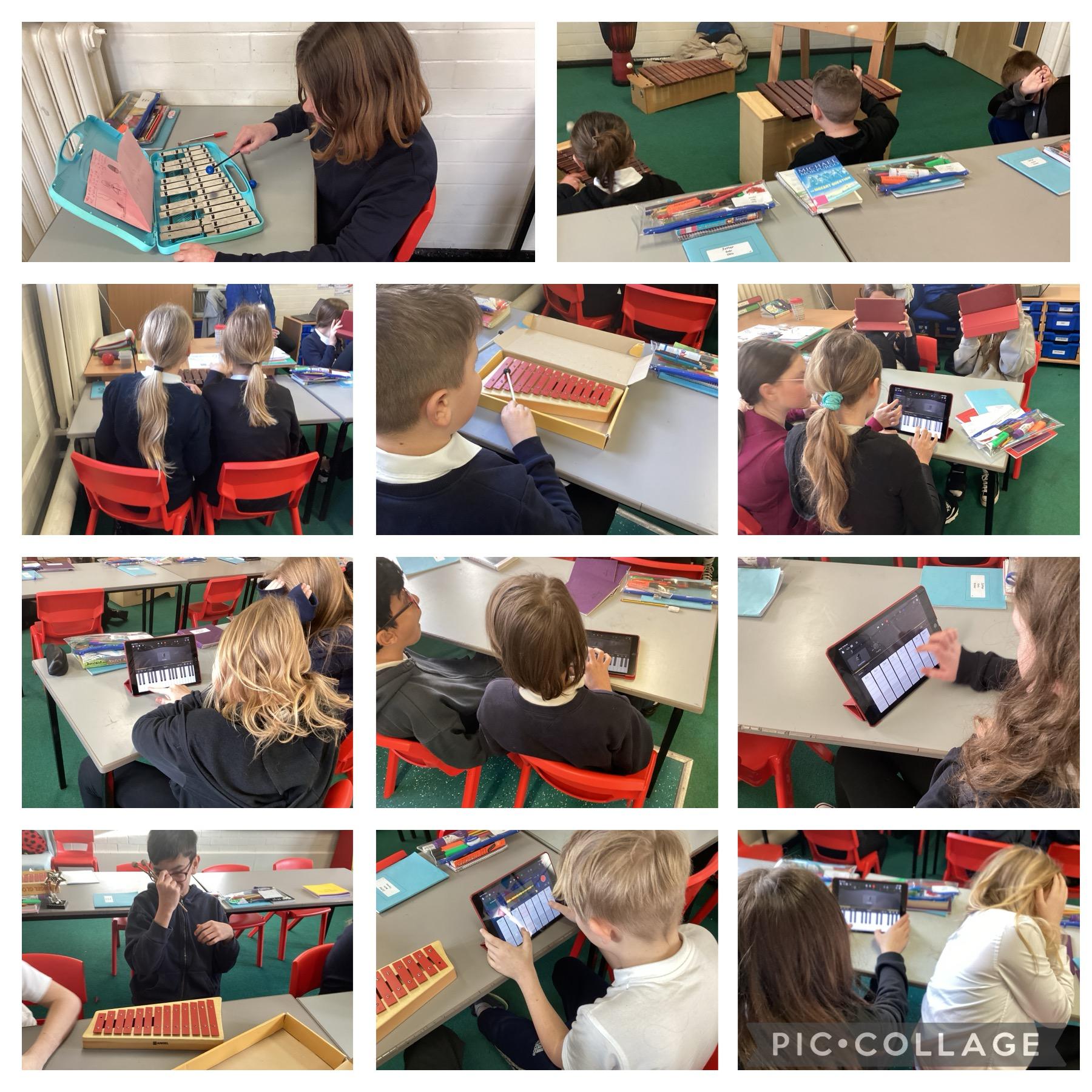
Over the course of the scheme, children will be taught how to sing fluently and expressively, play tuned (recorder, ukelele, keyboard, trumpet and trombone) and untuned (djembe and cajon) instruments accurately and with control. They will learn to recognise and name the interrelated elements of music - pitch, duration, tempo, timbre, structure, texture and dynamics - and use these in their own improvisations and compositions.
The school provision (Years 1 - 6) benefits from the direction of a specialist music provider, SoundAdvice. Lessons are supported by the class teacher. In Nursery and Reception, class teachers teach the music curriculum using the SingUp scheme. SoundAdvice also provide informal staff training where needed, in order to support confident teaching of the school scheme. Children progress in terms of tackling more complex tasks and doing more simple tasks better. Children with SEND and EAL have equal access to the curriculum due to its practical nature and the emphasis on learning by copying. Instructions can be given by non-verbal modelling; for example in playing phrases on the keyboard or recorder.
The classroom lessons are supplemented by a range of extra-curricular experiences including choirs, bands and the opportunity to learn to play a range of instruments. There are also opportunites for children to experience music performed by visiting artistes and to perform themselves in a range of external venues and with other musicians.
Impact
The expected impact of following the music curriculum at Asquith is that children will:
- Be confident performers, composers and listeners and will be able to express themselves musically at and beyond school.
- Show an appreciation and respect for a wide range of musical styles from around the world and will understand how music is influenced by the wider cultural, social and historical contexts in which it is developed.
- Understand the ways in which music can be written down to support composing and performing activities.
- Demonstrate and articulate an enthusiasm for music and be able to identify their own personal musical preferences.
- Meet the end of key stage expectations outlined in the national curriculum for Music.
Regular monitoring take place to assess how the Music curriculum is impacting on the children's progress using a range of methods e.g. in-lesson assessment, pupil discussions using the floorbooks developed over the year, concerts and presentations of work. Performances at the end of each unit are recorded and evaluated to ensure that appropriate learning has taken place and provide a starting point for further work. The class teacher has a practical involvement in this in supporting the Music specialist.
School Band preforming at St John's Centre with Creswell Brass Band


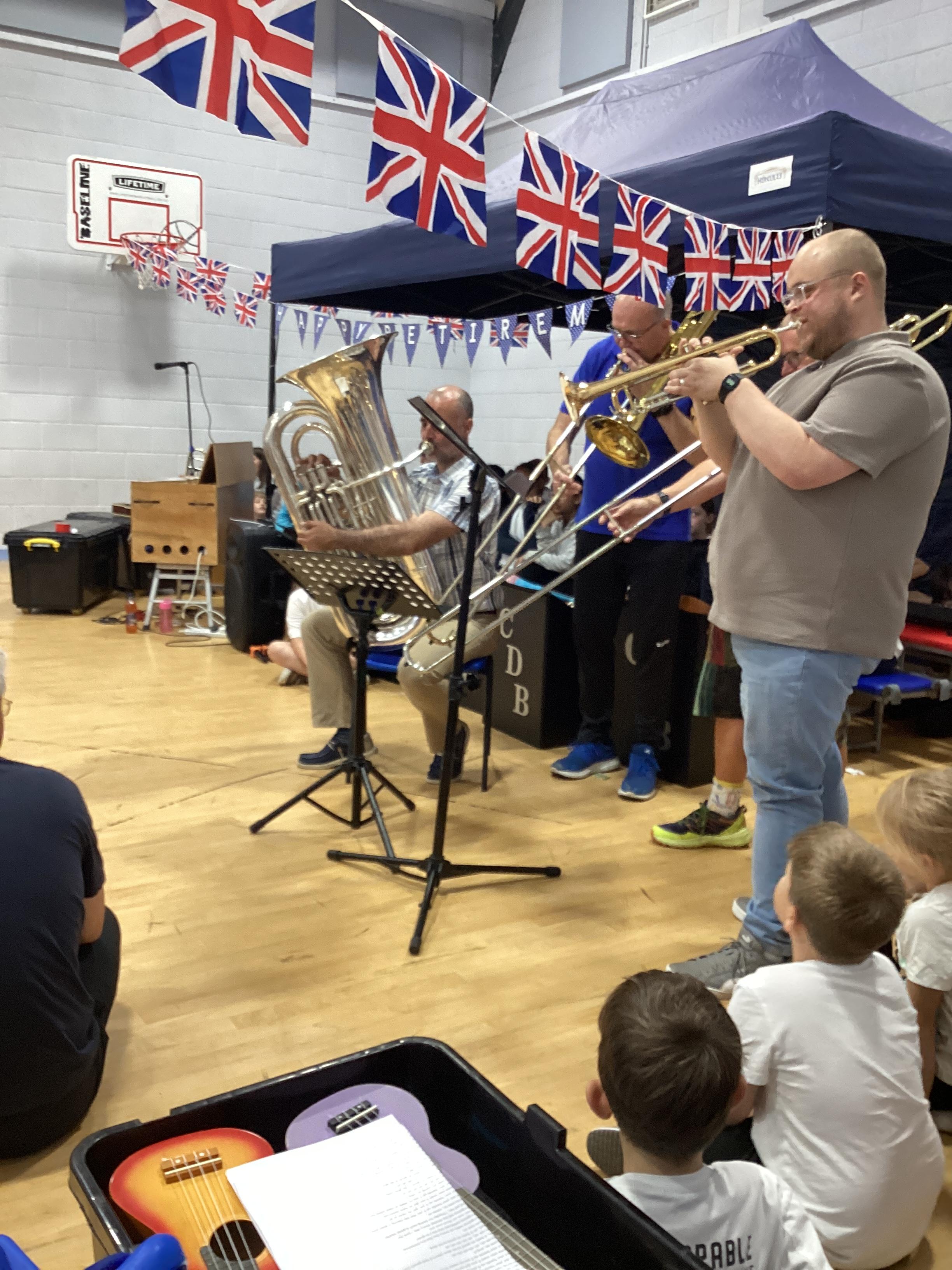
Mr Stanton and Mr Hyde performing at our concert.